
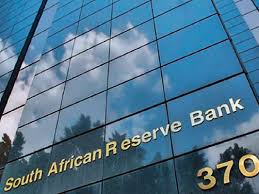
The South African Reserve Bank (SARB) is preparing to make its next monetary policy decision in November, drawing significant attention due to the economy’s slower-than-expected growth. The question is straightforward: Given the slowing inflation and stagnant growth, will the South African Reserve Bank (SARB) consider lowering interest rates?
Recent numbers show that consumer inflation fell to 3.3% in August and 3.4% in September, which is a lot lower than the SARB’s midpoint objective of 4.5%. This has led to a debate among economists and market watchers about whether the central bank will change its mind and cut the repo rate from 7.0% to 6.75%.
But inflation isn’t the only thing. South Africa’s economy is growing very slowly, at less than 1% a year. This is because financing rates are high, consumer demand is weak, and structural problems keep coming up.
The real interest rate, which is the nominal rate minus inflation, is at about 3.5%, which is one of the highest in emerging markets. This helps keep inflation expectations in check, but it also stops people from investing and spending money, especially in a country where unemployment is still very high.
Some experts say that SARB should act now to help the economy thrive, while others say that easing too soon might hurt the rand and make inflation worse.
Lesetja Kganyago, the governor of SARB, has been careful and talked a lot about how data-dependent and inflation-prone the economy is. But since inflation is well below the target and central banks around the world are moving toward easing, November’s decision could be a tipping point.
Whether SARB cuts or holds, the effects will ripple across consumers, businesses, and municipalities—especially in regions like KwaZulu-Natal, where economic recovery is uneven and service delivery continues under strain.

Leave a Reply