
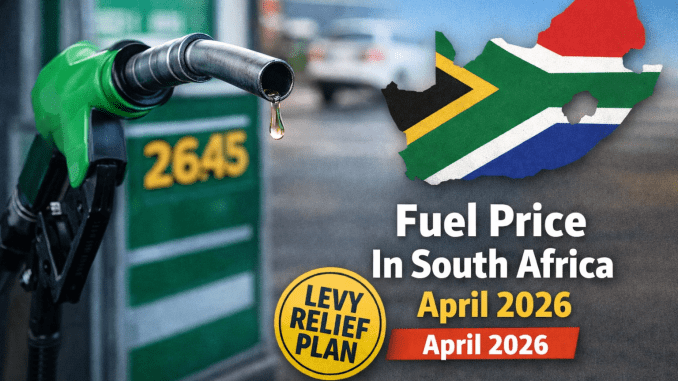
The fuel price increase in South Africa is once again dominating conversations as motorists prepare for higher petrol and diesel costs from 1 April 2026. The expected increase comes at a time when global tensions—particularly the ongoing conflict involving the United States, Israel, and Iran—are pushing oil prices higher. At the same time, local economic pressures continue to add to the cost. However, in a notable development, the Democratic Alliance (DA) has introduced a proposal that could significantly ease the burden on consumers, offering a sense of cautious optimism in an otherwise challenging situation.
Table of Contents
1. The April 2026 Fuel Price Increase In South Africa Explained
The latest fuel price forecast from the Central Energy Fund indicates a sharp increase across fuel categories:
- Petrol prices expected to rise by R5 a litre
- Diesel increases potentially even higher than petrol at R9 a litre
- Paraffin also likely to increase
These increases reflect recent global oil price movements and exchange rate pressures, both of which directly influence South Africa’s fuel pricing structure.
2. Global Conflict Is Driving Oil Prices Higher
A key driver behind the fuel price increase in South Africa is currently the escalation of geopolitical tensions involving the following:
- The United States
- Israel
- Iran
These tensions have:
- Increased fears of oil supply disruptions
- Placed pressure on key global oil routes
- Driven crude oil prices upward
For South Africa, which relies heavily on imported fuel, global price shocks quickly translate into higher local fuel costs.
3. A Weaker Rand Is Adding to the Pressure
The exchange rate plays a major role in fuel pricing.
- Oil is priced in US dollars
- A weaker rand means higher import costs
- Global uncertainty often weakens emerging market currencies like the rand
This combination means South Africans are facing a double impact:
higher global oil prices and a weaker currency.
4. Fuel Levies Remain a Large Part of the Price
A significant portion of what motorists pay is made up of government-imposed levies:
- General fuel levy
- Road Accident Fund (RAF) levy
- Carbon tax
These levies fund essential services but also contribute heavily to the final fuel price. This situation has led to growing public debate about whether temporary relief measures should be introduced.
5. The DA’s Fuel Levy Relief Plan Brings a New Perspective
In a significant development, the Democratic Alliance (DA) has proposed a plan to pause the fuel levy aimed at reducing the immediate burden on consumers.
Key elements of the proposal:
- A 50% reduction in:
- General fuel levy
- Road Accident Fund levy
- This could result in a combined reduction of over R3 per litre in petrol and diesel prices
What makes this proposal notable:
- The DA has indicated that the plan is fully funded
- It aims to avoid increasing taxes on South Africans
- It is positioned as a temporary relief measure during a crisis period
The party has also called on the ANC-led government to collaborate on implementing this solution to help cushion households and businesses from rising costs.
This proposal brings a sense of relief to many South Africans and demonstrates the active consideration of practical solutions.
6. Different Views on the Fuel Price Increase South Africa Is Facing
Government Perspective
Authorities typically emphasise:
- Fuel pricing is influenced by global markets
- South Africa has limited control over oil prices
- Levies fund critical infrastructure and social obligations
Public Reaction
Many citizens feel:
- Fuel prices are becoming increasingly unaffordable
- Relief measures are urgently needed
- The cost of living is rising too quickly
Economic Analysts
Experts suggest:
- The DA proposal could provide short-term relief
- However, long-term solutions are still necessary, such as:
- Investment in alternative energy
- Strengthening public transport systems
- Reducing reliance on imported fuel
7. The Real Impact on Everyday Life
The fuel price increase South Africa is experiencing affects nearly every part of daily life.
Direct effects:
- Higher transport costs
- Increased taxi and bus fares
Indirect effects:
- Rising food prices
- Increased delivery and logistics costs
- Pressure on small businesses
For households, such a situation often means adjusting budgets and prioritising essential spending.
8. Practical Ways to Manage Rising Fuel Costs
While broader solutions depend on policy decisions, individuals can take small steps to manage the impact:
- Combine errands to reduce fuel usage
- Keep vehicles well maintained.
- Use public transport where possible
- Consider carpooling
These steps may seem small, but they can help reduce monthly expenses over time.
Conclusion
The coming fuel price increase in South Africa reflects a complex mix of global conflict, economic pressures, and domestic policy decisions. The ongoing tensions involving the United States, Israel, and Iran highlight how international events can quickly affect local realities.
At the same time, the DA’s proposal for fuel levy relief introduces an important and hopeful dimension to the conversation. The ongoing tensions involving the United States, Israel, and Iran highlight how international events can quickly affect local realities.
For South Africans, the coming weeks will be important—not only in terms of fuel prices but also in how leaders respond to the growing pressure on households and the broader economy.
You may also be interested in:

Leave a Reply