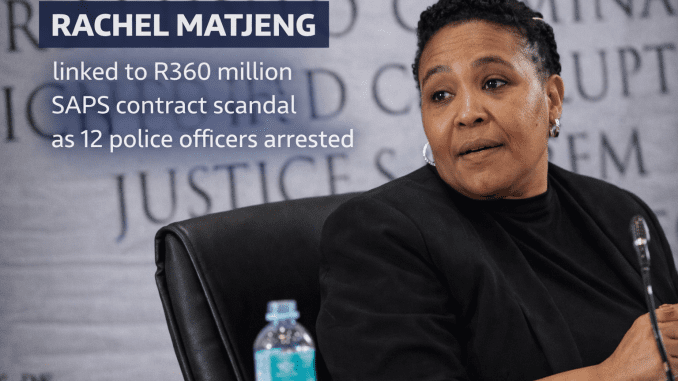
Rachel Matjeng is among those implicated in the R360 million SAPS health contract case, as authorities arrest 12 police officers over alleged corruption.
South Africa’s ongoing fight against corruption has taken another significant step, with the National Prosecuting Authority (NPA) confirming the arrest of 12 police officers linked to a R360 million SAPS health services contract. Among the accused are Vusimuzi “Cat” Matlala, as accused number 1, and SAPS Brigadier Rachel Matjeng, a senior official in SAPS Forensic Services.
The arrests were carried out by the NPA’s Investigating Directorate Against Corruption (IDAC) and are connected to a controversial agreement awarded to a private company associated with businessman Vusimuzi “Cat” Matlala.
This development comes at a time when public concern around corruption within key state institutions continues to grow, particularly within the criminal justice system.
Table of Contents
1. A full list of the accused, including Rachel Matjeng
Here is a full list of the accused; two companies have also been charged:
James Murray
Brian Cartright
Rachel Matjeng
Alpheus Ngema
Nyimeleni Nethengwe
Tunisia Maleka
Medicare24 Tshwane Districts
Luxo African Brand Investments
Busiswa Themba
Kirtsy Jonker
Petunia Lenono
Ofentse Tlhaole
Nonjabulo Mngadi
Anton Paulsen
Natsengae Monyai
1.1. What Happened in the SAPS Health Contract Case?
According to the NPA, the arrests relate to a health services contract awarded in 2024, which has since been under scrutiny by both a judicial commission and Parliament.
The contract involved services such as the following:
- Wellness screenings for SAPS employees
- Medical surveillance and assessments
- Ill-health retirement evaluations
- Injury-on-duty medical assessments
- Pre-employment health screenings
Investigations have revealed that the procurement process may have been compromised, with allegations that standard tender procedures were bypassed.
The 12 arrested individuals are believed to be supply chain management officials within SAPS who were directly involved in handling the tender process.
3. Charges Facing the Accused
The arrested officers are expected to appear in the Pretoria Magistrates’ Court, where they will face multiple charges, including the following:
- Corruption
- Fraud
- Contravention of the Public Finance Management Act (PFMA)
In addition to the police officers, a company director linked to the contract has also been arrested.
The NPA has indicated that the investigation is ongoing, and further developments may follow as more evidence is processed.
4. Allegations of Corruption and Undue Influence
Central to the case are allegations that the contract was awarded through improper influence and bribery.
Testimony presented at the Madlanga Commission of Inquiry has suggested that:
- Payments and gifts were allegedly used to influence officials
- The company involved may have received preferential treatment
- Internal processes within SAPS procurement structures were manipulated
These allegations form part of a broader investigation into how criminal networks may have infiltrated parts of South Africa’s law enforcement structures.
5. Role of the Madlanga Commission
The Madlanga Commission, established by President Cyril Ramaphosa, has been investigating claims that the country’s criminal justice system has been compromised.
Key areas of focus include:
- Corruption within SAPS
- Influence of organised crime on state institutions
- Weaknesses in procurement and governance systems
The commission has already heard testimony from dozens of witnesses, shedding light on the extent of alleged corruption networks operating within law enforcement.
Importantly, the arrests come while the commission is still underway, signalling a more proactive approach from authorities.
6. A Shift in How Corruption Cases Are Handled
One notable aspect of this case is the timing of the arrests.
Unlike previous commissions, where authorities often waited for final reports before taking action, the NPA has moved forward with arrests during the investigative process.
This approach reflects a shift towards:
- Faster accountability
- Preventing further damage to institutions
- Sending a clear message against corruption
Under the leadership of the current National Director of Public Prosecutions, efforts appear to be focused on acting on evidence as it emerges, rather than delaying enforcement.
7. Impact on Public Trust and Institutions
Cases like these have a direct impact on how South Africans view public institutions.
Concerns raised include:
- Trust in the police service
- Confidence in procurement systems
- Accountability within government
Public reaction to corruption cases often reflects broader frustrations about service delivery, governance, and transparency.
At the same time, visible action—such as arrests and prosecutions— can help rebuild confidence if followed through effectively.
8. What This Means for South Africans
While this case involves specific individuals and a particular contract, it highlights larger issues that affect everyday citizens.
8.1. Accountability in Public Spending
Government contracts involve public funds. It is essential to ensure the correct use of these funds for service delivery and economic stability.
8.2. Integrity of Law Enforcement
When corruption affects law enforcement agencies, it raises concerns about fairness, justice, and safety.
8.3. Strengthening Oversight Systems
Ongoing investigations and commissions aim to identify weaknesses and improve systems to prevent future misconduct.
9. What Happens Next?
The legal process will now move forward through the courts.
Key next steps include:
- Initial court appearances by the accused
- Possible bail hearings
- Further investigation and evidence gathering
- Potential expansion of the case if more individuals are implicated
As with all legal matters, the accused are presumed innocent until proven guilty in court.
10. A Broader Anti-Corruption Effort
This case forms part of a wider effort to address corruption in South Africa.
Recent developments have shown:
- Increased collaboration between investigative bodies
- Greater willingness to act during ongoing inquiries
- Continued public scrutiny of government processes
While challenges remain, these actions indicate a continued focus on holding individuals accountable and strengthening governance systems.
11. Final Thoughts
The arrest of 12 police officers linked to the R360 million SAPS health contract constitutes an important advance in South Africa’s anti-corruption efforts.
Beyond the legal proceedings, the case highlights the importance of:
- Transparent procurement processes
- Strong oversight mechanisms
- Accountability within public institutions
For many South Africans, the hope is that cases like this lead not only to justice, but also to long-term improvements in how public systems are managed and protected.
You may also be interested in What Mogotsi’s Testimony Could Reveal At The Madlanga Commission
Leave a Reply