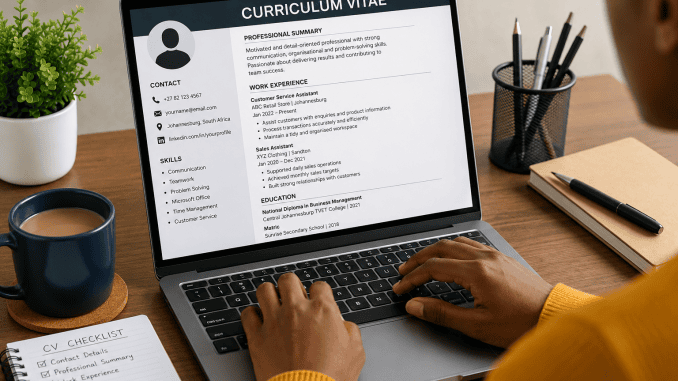
Why Learning How to Write a CV Still Matters in 2026
How to write a CV is one of the most valuable career skills you can learn, whether you’re applying for your very first job or taking the next step in a long-established career.
Today’s job market is highly competitive. Many employers receive hundreds of applications for a single vacancy, which means your CV often has only a few moments to make a positive first impression. A well-written CV won’t guarantee an interview, but it can significantly improve your chances of being shortlisted.
One of the biggest misconceptions is that every CV should look the same. In reality, the best CV reflects your experience and career stage. A school leaver shouldn’t try to compete with someone who has ten years of experience, and an experienced professional shouldn’t present their achievements the same way as a recent graduate.
This guide is designed for every type of job seeker—whether you’re leaving school, completing your studies, changing careers or applying for senior positions.
Table of Contents
1. What Every Professional CV Should Include
Regardless of your experience level, every CV should contain the same core sections.
These include:
- Your full name
- Mobile number
- Professional email address
- City or province
- Professional summary
- Education
- Work experience (where applicable)
- Skills
- Certifications or short courses
- References (or “Available on request”)
Your CV should be organised logically so employers can quickly find the information they need.
2. CV Tips for School Leavers and First-Time Job Seekers
One of the biggest concerns for first-time applicants is, “I don’t have any work experience.”
The truth is that many employers advertising entry-level positions, internships and learnerships don’t expect applicants to have years of experience. Instead, they look for potential, enthusiasm and a willingness to learn.
If you have never had a formal job, think about the experiences you’ve gained elsewhere.
You can include:
- Leadership roles at school
- Sports teams and achievements
- Community service
- Volunteer work
- Church or youth group involvement
- Helping in a family business
- Computer literacy
- Public speaking or debating
- Cultural activities
- Short online courses
- First aid or health and safety certificates
For example, if you helped organise a school fundraising event, you developed planning, communication and teamwork skills. If you captained a sports team, you demonstrated leadership and responsibility.
Employers value these experiences because they show how you work with others and solve problems.
3. CV Tips for Graduates and Internship Applicants
Graduates often underestimate the value of their academic experience.
If you’ve recently completed a qualification, your education section should be one of the strongest parts of your CV.
Include:
- Your qualification
- Institution
- Graduation year
- Academic projects
- Research assignments
- Practical training
- Laboratory work
- Final-year projects
- Leadership positions
- Student societies
- Volunteer work
- Vacation work
- Internships
If you completed a project that solved a real-world problem or collaborated with industry partners, mention it. Employers appreciate practical experience, even when it comes from your studies.
4. CV Tips for Experienced Professionals
If you’ve worked for several years, your CV should focus less on listing duties and more on demonstrating results.
Rather than saying:
- Managed customer accounts.
Explain the impact:
- Managed a portfolio of more than 150 customer accounts while maintaining strong client relationships and supporting business growth.
Where possible, include measurable achievements.
Examples include:
- Increased sales.
- Reduced costs.
- Improved customer satisfaction.
- Led successful projects.
- Trained new employees.
- Introduced more efficient processes.
- Received awards or recognition.
- Earned promotions.
Achievements help employers understand the value you can bring to their organisation.
5. CV Tips for Career Changers
Changing careers can feel challenging, but your previous experience is often more valuable than you realise.
Focus on transferable skills such as:
- Communication
- Customer service
- Leadership
- Teamwork
- Time management
- Organisation
- Problem-solving
- Administration
- Project coordination
- Computer skills
For example, someone moving from retail into administration may already have experience dealing with customers, managing records, processing payments and working under pressure.
Highlighting these transferable skills can help employers see your potential in a new role.
6. The Skills Employers Want to See in 2026
Technical skills remain important, but employers are increasingly looking for people who can adapt to changing workplaces.
Some of the most valuable skills include:
Technical Skills
- Microsoft Excel
- Microsoft Word
- PowerPoint
- Google Workspace
- Data analysis
- Digital communication
- Customer relationship management (CRM)
- Accounting software
- Basic AI literacy
- Project management software
Workplace Skills
- Communication
- Adaptability
- Teamwork
- Critical thinking
- Time management
- Customer service
- Attention to detail
- Leadership
- Reliability
- Problem-solving
Only include skills you genuinely possess. Employers often test these during interviews or practical assessments.
You May Also Be Interested In:
7. Write About Achievements Instead of Responsibilities
Many CVs simply repeat job descriptions.
Employers want to know what difference you made.
Compare these examples.
Instead of:
- Assisted customers.
Write:
- Assisted approximately 60 customers daily while maintaining high service standards.
Instead of:
- Managed stock.
Write:
- Improved stock accuracy by following inventory control procedures and reducing discrepancies.
Specific examples help employers understand your contribution.
8. Tailor Your CV for Every Application
Sending the same CV to every employer is one of the most common mistakes job seekers make.
Before applying:
- Read the job advertisement carefully.
- Identify the key skills required.
- Adjust your professional summary.
- Highlight your most relevant experience.
- Reorder your bullet points where appropriate.
- Include keywords naturally from the job description.
Tailoring your CV demonstrates genuine interest in the position and makes it easier for recruiters to see why you’re a suitable candidate.
9. Keep Your CV Simple and Easy to Read
A professional CV doesn’t need colourful graphics or complicated layouts.
In most cases, simplicity works best.
Choose:
- A professional font such as Arial, Calibri or Aptos.
- Clear headings.
- Consistent spacing.
- Bullet points instead of long paragraphs.
- Plenty of white space.
Aim to keep your CV to two pages if possible, although experienced professionals may require additional space for relevant experience.
10. Optimise Your CV for Online Applications
Many employers now use Applicant Tracking Systems (ATS) to organise applications before a recruiter reviews them.
To improve compatibility:
- Use standard headings like “Work Experience” and “Education”.
- Avoid placing important information inside images or text boxes.
- Save your CV as a PDF unless another format is requested.
- Use keywords naturally from the vacancy advertisement.
- Ensure your file name is professional, such as Firstname_Surname_CV.pdf.
These small adjustments help ensure your CV is easy for both software and recruiters to read.
11. Should You Use AI to Help Write Your CV?
Artificial intelligence has become a useful tool for many job seekers, but it should be used responsibly.
AI can help you:
- Improve grammar and spelling.
- Rewrite awkward sentences.
- Make your CV easier to read.
- Tailor your CV for a particular job.
- Identify skills you may have forgotten to include.
However, AI should never be used to invent qualifications, exaggerate experience or claim skills you don’t have. Your CV should always reflect your genuine education, experience and achievements. During interviews, employers may ask you to discuss everything you’ve included.
Starting from a blank page can feel overwhelming, especially if you’re writing your first CV or updating one you haven’t looked at in years. Using a professionally designed template can help you organise your information clearly while maintaining a clean and easy-to-read layout.
A template won’t guarantee an interview, but it can make your CV look more polished and ensure you don’t leave out important sections such as your professional summary, work experience, education and key skills. Remember that the content of your CV is far more important than the design, so choose a simple, professional template rather than one filled with graphics or decorative elements.
If you’re looking for a reliable place to start, these free resources are worth exploring:
Microsoft Create offers a range of free CV and résumé templates that can be customised in Microsoft Word: https://create.microsoft.com/en-us/templates/resumes
Google Docs includes free résumé templates that can be edited online and shared easily with potential employers: https://docs.google.com
LinkedIn also provides guidance on building a strong professional profile, which can complement your CV and help recruiters learn more about your experience: https://www.linkedin.com
If you’re applying for jobs in South Africa, it’s also worth exploring trusted employment resources such as the Department of Employment and Labour (https://www.labour.gov.za) and SAYouth (https://sayouth.mobi), which regularly publish employment information, career resources and opportunities for young job seekers.
12. Common CV Mistakes That Can Cost You an Interview
Even qualified candidates can be overlooked because of avoidable mistakes.
Before applying, check for:
- Spelling and grammar errors.
- Incorrect phone numbers.
- Unprofessional email addresses.
- Missing employment dates.
- Outdated information.
- Inconsistent formatting.
- False or exaggerated claims.
- Long paragraphs that are difficult to read.
- Missing supporting documents.
- Generic professional summaries.
Reviewing your CV carefully can prevent small errors from creating a poor first impression.
13. Your Final CV Checklist Before Applying
Before clicking “Submit”, ask yourself:
✔ Is my CV tailored to this specific job?
✔ Is my contact information correct?
✔ Have I highlighted my most relevant skills and achievements?
✔ Have I included measurable results where possible?
✔ Is my formatting consistent?
✔ Have I checked for spelling and grammar mistakes?
✔ Have I attached all requested documents?
✔ Would I feel confident discussing everything on my CV during an interview?
If you can answer “yes” to each question, you’re in a strong position to submit your application.
14. Final Thoughts
Learning how to write a CV is an investment in your future career. Whether you’re looking for your first job, applying for an internship, entering the workforce after graduation or pursuing a senior leadership role, your CV is your opportunity to present your skills and experience clearly and professionally.
Remember that there isn’t a single “perfect” CV. The strongest CV is one that reflects your own career journey, is tailored to the role you’re applying for and accurately demonstrates the value you can bring to an employer.
Take the time to review and update your CV regularly, especially as you gain new qualifications, skills or work experience. A thoughtful, well-organised CV can help you stand out in a competitive job market and increase your chances of securing an interview.
Most importantly, be honest, be specific and let your genuine achievements tell your professional story.
Leave a Reply