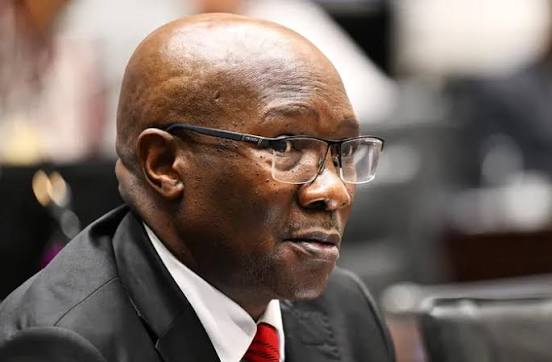
Dumisani Khumalo charges withdrawn is one of the major developments emerging from South Africa’s criminal justice system today after the National Prosecuting Authority formally ended the fraud and corruption case against the Crime Intelligence head and several of his co-accused.
Lieutenant-General Dumisani Khumalo, Brigadier Dineo Mokwele and five others had their charges formally withdrawn in the Pretoria Magistrates’ Court on Friday, 21 August 2026. The decision brings a dramatic turn to a case that began with arrests in June 2025 and later came under intense scrutiny during proceedings at the Madlanga Commission.
The development is significant not only because of Khumalo’s senior position within Crime Intelligence, but also because questions raised about the investigation ultimately contributed to the NPA reconsidering whether the prosecution should continue.
So what happened, why did the case unravel, and what does today’s decision actually mean?
Table of Contents
1. NPA Formally Withdraws the Charges
The most important development is now official.
The National Prosecuting Authority formally withdrew the fraud and corruption charges against Khumalo, Mokwele and five other accused in the Pretoria Magistrates’ Court on Friday.
The withdrawal had been expected after the NPA announced earlier that it intended to abandon the prosecution, but Friday’s court proceedings completed that process.
eNCA reported that after the charges were withdrawn, the presiding officer told Khumalo and Mokwele that they were free to go.
This is a significant change from where the case stood when Khumalo and other senior Crime Intelligence officials were arrested in June 2025.
2. What Khumalo and His Co-Accused Were Accused Of
The criminal case centred largely on the appointment of Brigadier Dineo Mokwele to a senior position within Crime Intelligence.
The State alleged that Mokwele’s appointment had been irregular and that proper procedures had not been followed.
The case included allegations concerning the appointment process and issues around vetting and security-clearance requirements.
These were serious allegations because Crime Intelligence handles highly sensitive information and operates within an environment where appointments, security clearance and access to intelligence resources carry obvious national-security implications.
However, allegations made in a criminal charge still need to be supported by evidence capable of sustaining a prosecution.
That became increasingly important as the case received greater scrutiny.
3. How the Madlanga Commission Changed the Picture
One of the most important chapters in the Dumisani Khumalo charges withdrawn story unfolded away from the criminal court.
Evidence heard at the Madlanga Commission raised serious questions about how aspects of the case had been investigated and pursued.
One particularly important issue involved Mokwele’s qualifications.
Reports from the commission indicated that evidence emerged showing Mokwele was not unqualified for the position as had been alleged. Eyewitness News reported that the commission heard she was in fact qualified and even described as overqualified for the position.
That mattered because questions around her suitability had formed part of the controversy surrounding the appointment.
The commission also heard evidence that exposed concerns about aspects of the investigation that led to the officials being charged.
The developments placed increasing scrutiny on the Investigating Directorate Against Corruption, or IDAC, which had arrested Khumalo and the other officials.
You May Also Be Interested In: Deano van Rooyen Leaves Orlando Pirates: 5 Memorable Moments From His Buccaneers Journey
4. Why the NPA Reconsidered the Case
The NPA’s eventual decision did not happen in isolation.
Defence representations were submitted challenging the prosecution, while questions emerging around the investigation added further pressure for the case to be reconsidered.
According to reporting by Eyewitness News, the combination of defence representations and growing concerns about the investigation prompted a rethink within the NPA.
There is another element that deserves careful treatment.
EWN reported that it had seen correspondence from a state advocate referring to pressure to have the case withdrawn.
That reference does not by itself prove that improper political or external interference caused the prosecution to be abandoned. Without a formal finding establishing such interference, it would be irresponsible to present that as fact.
What can be said confidently is that the prosecution came under considerable scrutiny, and the NPA ultimately concluded that the charges should be withdrawn.
The decision was initially communicated in July before the matter returned to court for the formal withdrawal.
5. What Withdrawal of the Charges Actually Means
This is perhaps the most important distinction for readers to understand.
Having criminal charges withdrawn is not exactly the same thing as being acquitted after a completed trial.
An acquittal normally follows a court process in which the evidence has been considered and the accused is found not guilty.
In this case, the prosecution itself has been withdrawn.
Khumalo and the other accused therefore no longer face these charges following Friday’s proceedings, but there was no completed criminal trial producing a verdict on the allegations.
The presumption of innocence remains fundamental: people accused of crimes are presumed innocent unless proven guilty in court.
This distinction is particularly important in high-profile cases, where headlines can sometimes create the impression that allegations themselves amount to proof.
They do not.
6. Why This Case Matters Beyond Khumalo
The significance of this story extends beyond the immediate futures of Khumalo, Mokwele and their co-accused.
It raises broader questions about how high-profile criminal investigations are conducted.
When senior law-enforcement officials are arrested, the consequences can be substantial even before a trial begins. Reputations are affected, institutions face public scrutiny and confidence in the criminal justice system can be tested.
The same is true when a major prosecution later collapses or is withdrawn.
South Africans are entitled to expect credible corruption allegations to be investigated thoroughly. At the same time, those investigations need to meet proper evidential and procedural standards.
The controversy surrounding this case therefore touches on two principles that should not be treated as competing ideas: holding powerful officials accountable and ensuring that prosecutions are based on properly investigated evidence.
Both matter to public confidence.
7. What Happens Next?
For Khumalo and his co-accused, Friday’s court appearance brings the criminal proceedings arising from these charges to an end for now.
But the broader questions surrounding the case are unlikely to disappear immediately.
Evidence concerning how the investigation was conducted has already attracted significant attention at the Madlanga Commission.
The controversy has also placed IDAC and decisions made during the investigation under scrutiny.
That means the withdrawal may close one legal chapter while leaving important institutional questions unanswered.
Any further findings about misconduct, improper pressure or failures within the investigation would need to be supported by evidence and the appropriate official processes.
For now, the confirmed development is straightforward: the NPA has formally withdrawn the fraud and corruption charges against Khumalo, Mokwele and their co-accused.
8. Final Thoughts
The Dumisani Khumalo charges withdrawn development is important precisely because of how dramatically the case has changed.
What began with the arrest of some of South Africa’s most senior Crime Intelligence officials in June 2025 has ended, more than a year later, with the prosecution being formally withdrawn.
In between came defence challenges, evidence at the Madlanga Commission and serious scrutiny of how the investigation had been handled.
It would be tempting to reduce the story to either “senior officials were charged with corruption” or “the accused were cleared.”
Neither description tells the full story.
The more important issue now is understanding how a case involving officials at such a senior level reached the point of prosecution and why the NPA ultimately decided it should not continue.
Those questions matter beyond the individuals involved.
A functioning justice system must be capable of pursuing credible allegations against powerful people. It must also be capable of recognising when a prosecution should not proceed.
Public confidence depends on both.
9. Frequently Asked Questions
Have the charges against Dumisani Khumalo officially been withdrawn?
Yes. The NPA formally withdrew the fraud and corruption charges against Lieutenant-General Dumisani Khumalo, Brigadier Dineo Mokwele and five others in the Pretoria Magistrates’ Court on 21 August 2026.
What was Dumisani Khumalo accused of?
The case related to allegations surrounding the allegedly irregular appointment of Brigadier Dineo Mokwele to a senior position within Crime Intelligence.
Why did the NPA withdraw the charges?
The NPA reconsidered the prosecution following defence representations and concerns that emerged about the investigation. Evidence heard at the Madlanga Commission also placed aspects of the case under significant scrutiny.
What did the Madlanga Commission reveal about Dineo Mokwele?
Evidence reported from the commission challenged claims surrounding her suitability for the position. The commission heard that Mokwele was qualified and was described as being overqualified for the role.
Leave a Reply